rev. 12/8/2025
Introduction
Coverage. This is a comprehensive exam covering the entire semester, a chance to consolidate what you’ve learned and to demonstrate your mastery of the course material.
Format. See details below. I ask you to write two short essays and one long essay.
Timing. The exam is written as a two-hour exam. Some of you won’t need all of that time. If you need a bit longer to finish your essays, I will give you some extra time.
Moodle Safe Exam Browser. You will complete the exam on Moodle using the Safe Exam Browser. I suggest you test the Safe Exam Browser – and restart your computer just before the exam. Be sure to bring your laptop computer and your charger.
What else can you bring? No notes are allowed (sorry, I changed this from last year). You can bring along water and a snack if you need to keep your energy up.
What makes for a strong final exam? Your goal in this exam is to show the mastery of our course – that is, of our readings and films, our presentations, our discussions, our examples. A strong final is like a discussion about the course we’ve just finished.
And a strong essay in an exam setting? A strong essay will: 1) Make a clear claim in answer to the question (argument), 2) Use specific course evidence (authors, examples, details such as names or dates or events, rough quotations), 3) Explain significance (“why this matters”), 4) Show connections across weeks, readings, and ideas. In many cases (maybe all) you will have more that you can say than you have time for. A sharp essay will show that you are aware of all of the dimensions of a question even as you focus on a set of themes and examples.
How to prepare? To prepare for the exam, work through this study guide – and look to the examples from the short exam study guides. I will post to Moodle all of the slides I used in class (as well as the slides from your group presentations on Winter). I suggest you outline ideas for the short and long essay questions listed here. I suggest you work together in groups to talk through key themes and examples. Note that I have not suggested using AI tools to help you review. In my brief testing, these will often lead you toward banal and generic claims and away from the material of our course.
Format
The final exam will look like this…
History 208 Final Exam
Directions for Exam
No notes are allowed during the exam.
Don’t repeat yourself across your essays. I will read your entire exam as a measure of your mastery of the course.
If you need to go to the bathroom, raise your hand and let me know – and show me that you’ve left your phone behind.
Good luck! Gks
Part One. Short Essays on Important Periods & Defining Events (50%, about 60 mins. total)
Write two short essays. Your essays should be about three or four paragraphs in length.
I will provide two questions from among the following themes (and you will pick one to write about):
- The Tools of Historical Analysis
- Tensions in the Belle Epoque or Wilhelmine Era
- World War One on the Battle Front
- World War One on the Home Front
- The Periodization of the 1920s
- The Rise of Fascism in Italy
- The Consequences of the Depression
- The Soviet Union in the 1930s
I will provide two questions from among the following themes (and you will pick one to write about):
- The Nazi Seizure of Power
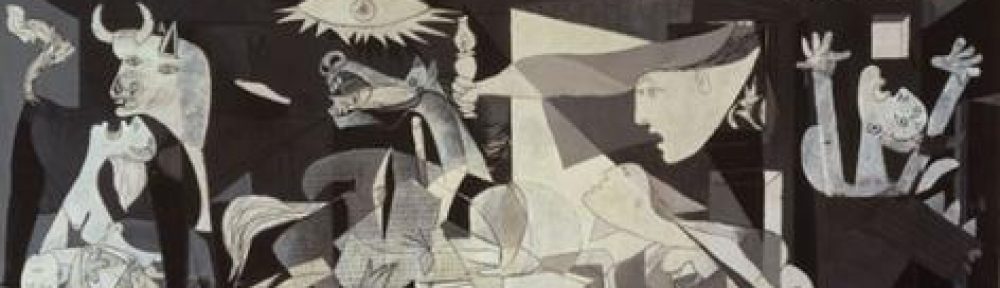
- The Spanish Civil War
- The International Crisis of the Late 1930s
- The Second World War on the Battle Front
- The Holocaust
- Jay Winter, Sites of Memory, Sites of Mourning
- George Orwell, Homage to Catalonia
- The Legacies of this History in Europe Today
Part Two. Long Essay on the History We’ve Studied (50%, about 60 mins.)
Write one essay. Your essay should be about five to seven paragraphs in length. Your essay should draw on material from across the semester.
I will provide two long essay questions from which you can choose. These will focus on two of the following themes:
- Europe in 1900 versus Europe in 1945
- War, 1900-1945. What were the causes of war? What were consequences?
- Challenges to democracy, 1900-1945. What were the challenges to democracy in Europe in 1900-1945?
- Europe east and west, 1900-1945. What were the contrasts that shaped the experience of Europeans in the east vs. in the west?
- Ideologies, 1900-1945. What new political ideologies emerged and flourished in this era? What were their consequences?
- Experience and Memory in Europe, 1900-1945. How was this history (or some important elements of this history) experienced? How was it remembered? What can we learn from those memories and experiences?